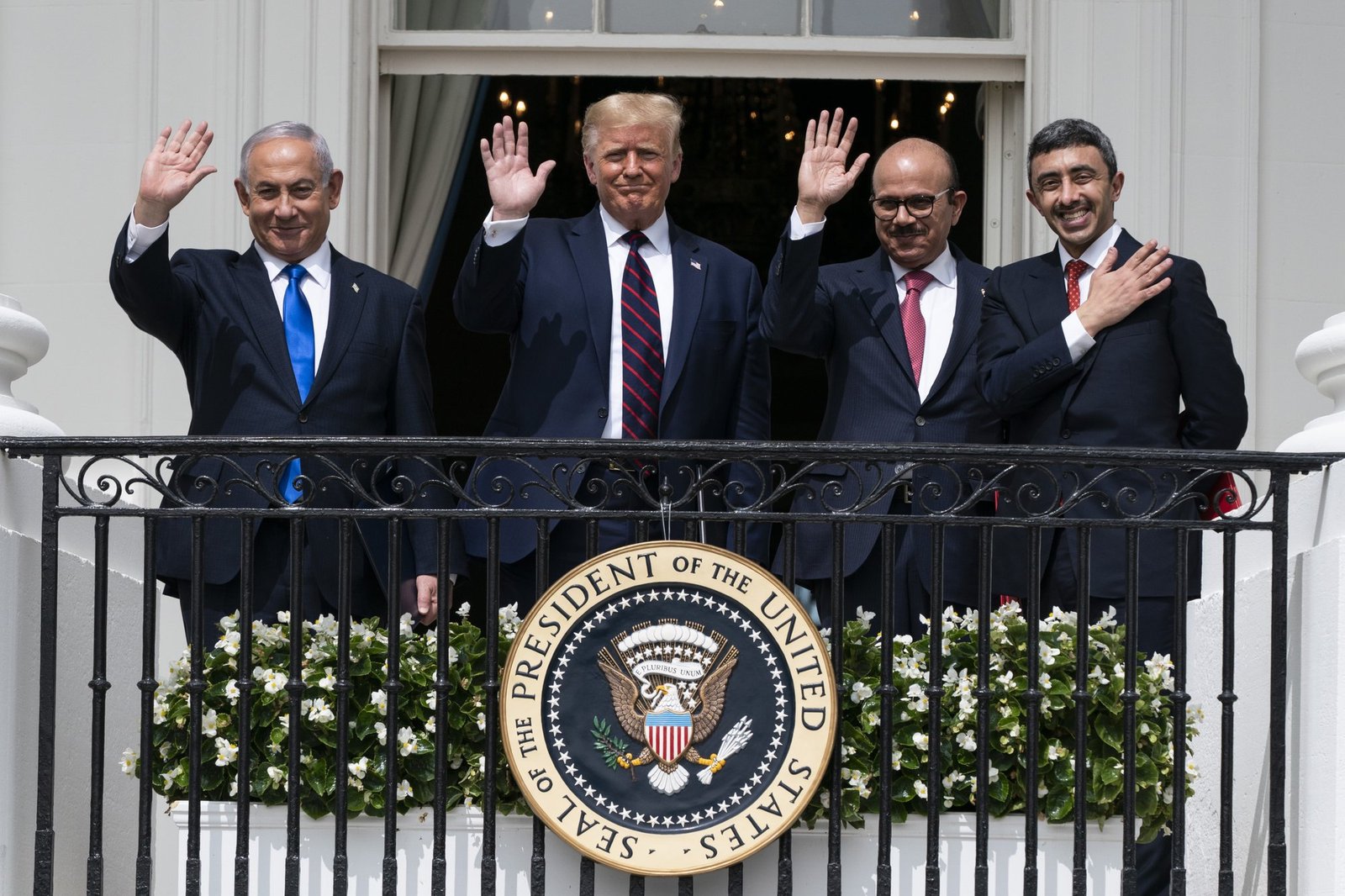
WASHINGTON: Israel, the United Arab Emirates and Bahrain have signed agreements to establish formal relations, ending a decades-old taboo in Arab diplomacy as power and priorities shift in the Middle East.
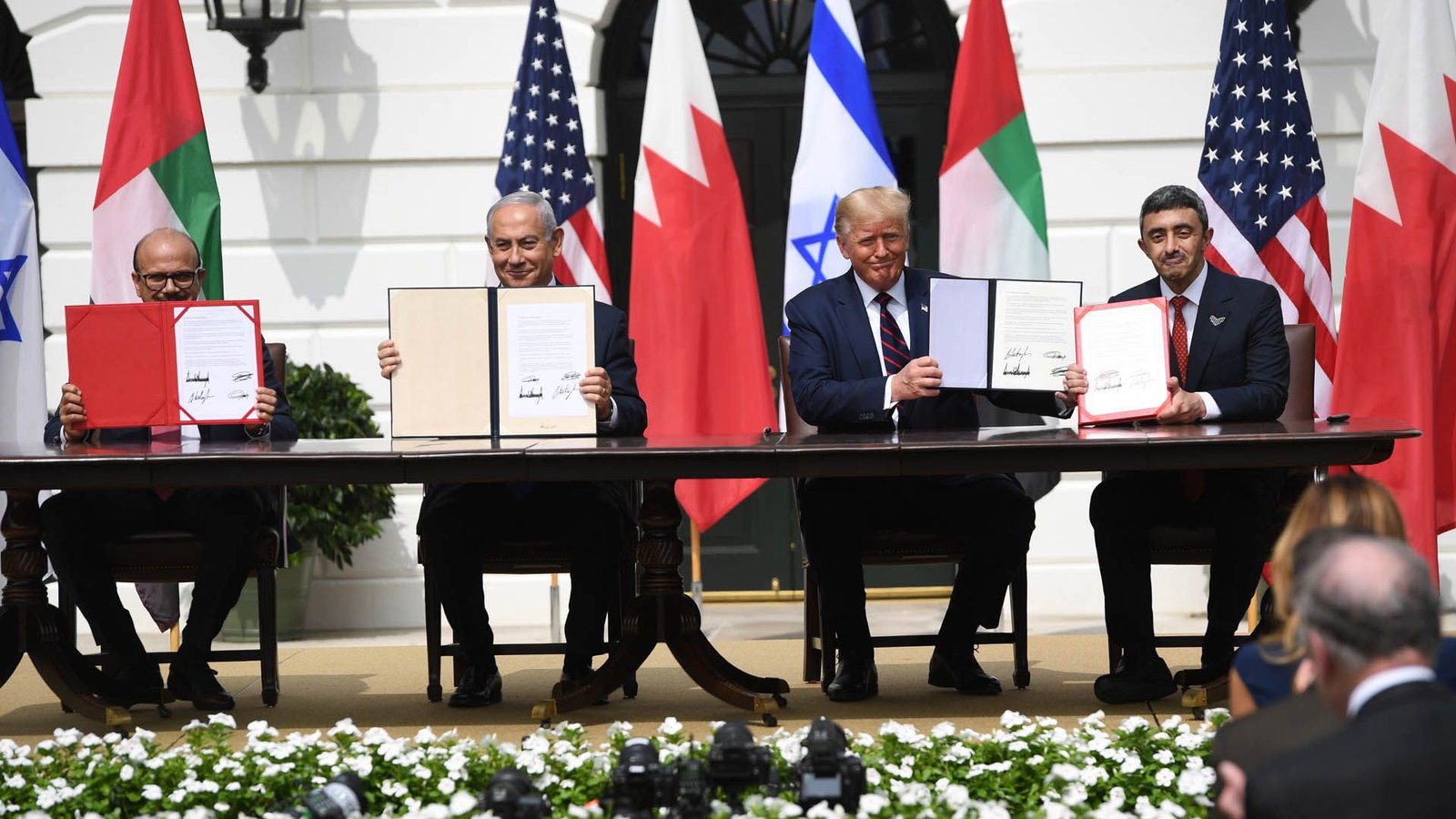
“Today’s signing sets history on a new course,” Donald Trump told a crowd outside the White House where the deal was signed. “This an incredible day for the world,” he said.
Long shunned because of its occupation of the Palestinian territories, Israel has always been considered a regional pariah. Yet as mostly autocratic Arab governments grow apathetic towards the Palestinian cause, and with Israel and the Gulf states sharing a common enemy in Iran, some relations have flourished discreetly in recent years.

The Israeli leader signed bilateral accords at the White House with UAE Foreign Minister Abdullah bin Zayed Al-Nahyan and Bahrain Foreign Minister Abdullatif al-Zayani, and all three leaders signed a joint declaration along with Trump.
The deals make them the third and fourth Arab states to take such steps to normalize ties since Israel signed peace treaties with Egypt in 1979 and Jordan in 1994.
The UAE’s minister of state for foreign affairs, Anwar Gargash, said on Tuesday his country’s decision to normalize relations with Israel had “broken the psychological barrier” and was “the way forward” for the region, creating more leverage.
The back-to-back agreements, which have drawn bitter condemnation from the Palestinians, mark an improbable diplomatic victory for Trump. He has spent his presidency forecasting deals on such intractable problems as North Korea’s nuclear program only to find actual achievements elusive.
Bringing Israel, the UAE and Bahrain together reflects their shared concern about Iran’s rising influence in the region and development of ballistic missiles. Iran has been critical of both deals.
With Trump up for re-election on November 3, the accords could help shore up support among pro-Israel Christian evangelical voters, an important part of his political base.
Talking to a media channel before the ceremony, Trump said he expected more Arab countries to normalize ties with Israel and predicted the Palestinians would eventually join as well or else be “left out in the cold.”
One target of White House appeals is Saudi Arabia, the biggest Gulf Arab power. So far the Saudis, whose king is custodian of Islam s holiest sites and rules the world’s largest oil exporter, have signaled they are not ready.
Another target is Oman, whose leader spoke with Trump last week. Oman was expected to send its ambassador to Tuesday s ceremony, a senior US official said. But there was no word on whether the Saudis would attend.❐