
By Husneara Choudhury
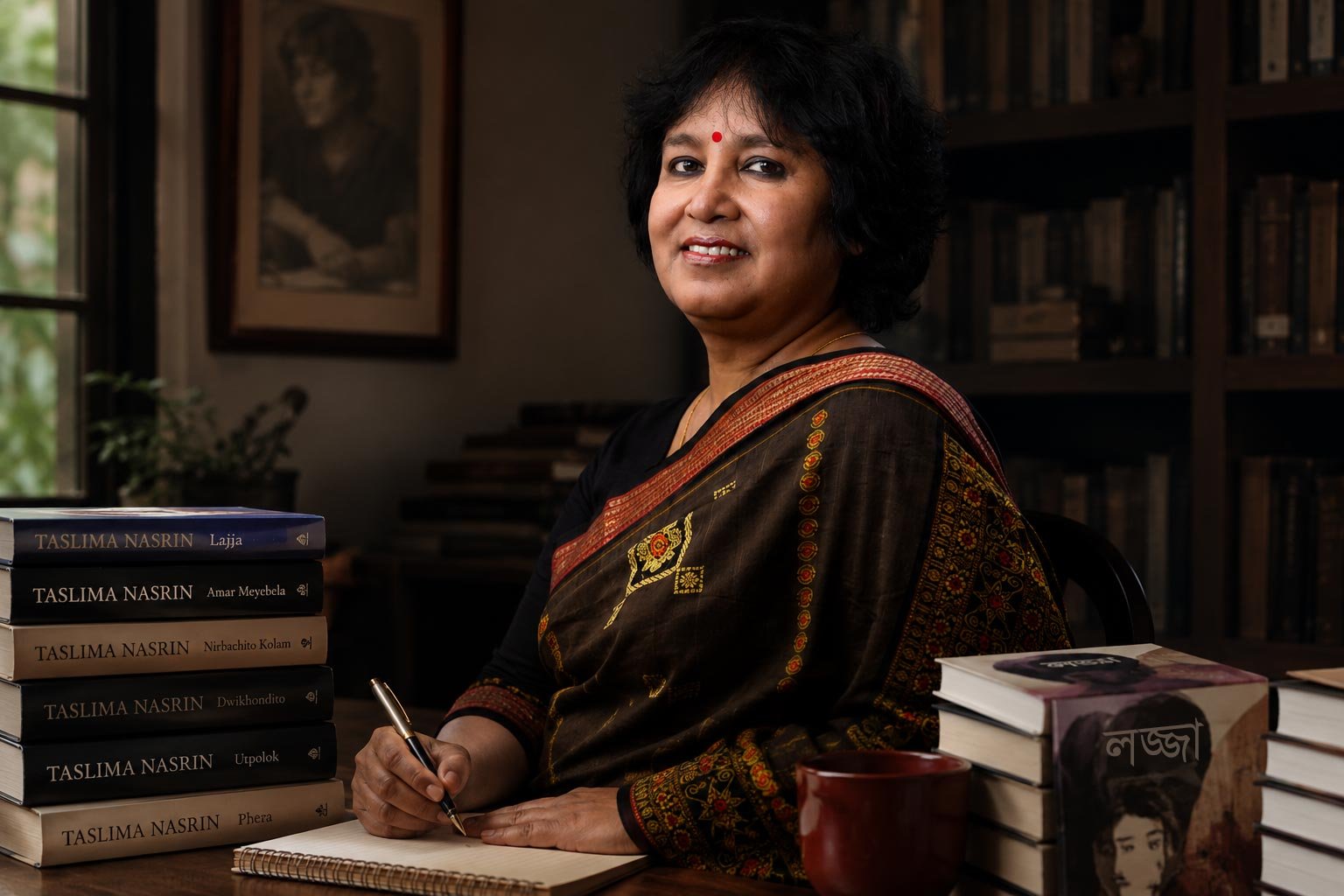
The Kolkata chapter of renowned and controversial Bengali writer Taslima Nasrin remains one of the most discussed events in the literary, social, and political history of South Asia. Her departure from Kolkata in 2007 was not merely the story of a writer leaving a city; it became a larger debate about freedom of expression, personal security, and society’s ability to accept different opinions.
For decades, Taslima Nasrin has used her writings to address issues such as women’s rights, human rights, secularism, and social inequality. Her bold and outspoken literary works have earned admiration from many readers and intellectuals, while also facing criticism and opposition from various sections of society.

In 2007, while living in Kolkata, some of her writings and public statements led to protests and controversy among different groups. As tensions increased and concerns grew over her safety, authorities moved her to a secure location in order to maintain law and order. Later, she left Kolkata and moved to New Delhi.
However, for Taslima Nasrin, Kolkata was more than just a city—it was an emotional home deeply connected to her language, culture, literature, and creative identity. As a Bengali writer, she considered Kolkata an important part of her literary journey. Therefore, leaving the city became one of the most unforgettable and painful chapters of her personal and professional life.
The controversy surrounding her departure gradually transformed into a broader discussion: How much freedom should a writer have to express independent thoughts, and how tolerant should a society be toward views it disagrees with?
Supporters of Taslima Nasrin believe that protecting a writer’s safety and creative freedom is a fundamental responsibility of a democratic society. They argue that disagreements with a writer’s views should be addressed through dialogue, debate, and intellectual exchange.
On the other hand, critics have argued that freedom of expression should be accompanied by sensitivity toward social and religious sentiments. They believe that freedom and responsibility must go hand in hand.
Nearly two decades later, Taslima Nasrin’s departure from Kolkata continues to be discussed because it represents more than an individual writer’s personal journey. It reflects a larger question about tolerance, freedom of thought, and the ability of societies to make space for diverse voices.
A healthy and humane society is built on freedom of thought, mutual respect, and tolerance. The Kolkata chapter of Taslima Nasrin’s life reminds us that embracing different opinions, encouraging meaningful dialogue, and protecting creative freedom are essential pillars of a democratic society.